
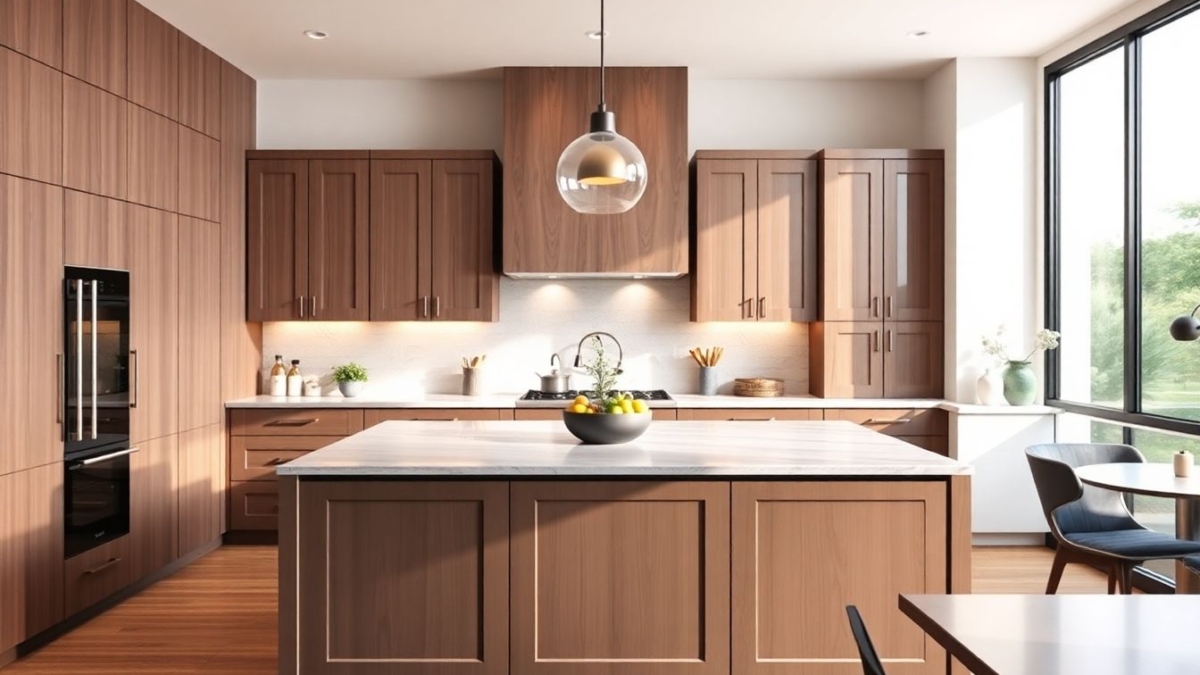
How we think about balance in a kitchen
At DOCA Houston, we aim for kitchens that work and please the eye. Balance is not a buzzword. It is a plan. We start by asking what you do in the space and how you want it to feel while you work there.
Good balance keeps daily tasks smooth and keeps the room calm. It ties cabinet scale to counter height. It links storage to workflow. It mixes finishes so the room has a clear voice without noise.
Below we walk through design choices we use on projects. Each choice holds a tradeoff. We show how to choose with purpose.
Design priorities that guide choices
What we set first
We pick priorities before we pick finishes. Priorities give a rule set for tough calls. Typical priorities include workflow, visual calm, durability, and resale fit. Pick two priorities to dominate. The rest follow.
When workflow leads, we place prep near water and storage near cooktop. When visual calm leads, we hide appliances and use flush cabinetry. Durability pushes us toward hardwearing surfaces and reliable hardware.
Choosing upfront avoids backtracking. It keeps the project on schedule and on budget.
Layout and workflow rules that matter
Flow beats tricks
A plan that flows saves time every day. We treat a kitchen as a set of paths. Paths run from fridge to sink to cooktop and to cleanup. Short, clear paths lower friction.
We place zones so each task has its own home. A good layout limits crossing. Islands host prep and serving. A pantry sits near the fridge. Each choice reduces movement and warms the space.
Choosing materials and finishes that last
Materials set the tone and the upkeep. We use materials with known life spans and clear care steps. Solid wood veneers offer repair options. Lacquer panels give flat planes and crisp lines. Engineered stone resists stains and holds up to heat.
Finish variety brings depth without clutter. Matte cabinet faces pair with a honed stone counter. A low sheen wood panel warms a monochrome palette. Keep the finish story simple so light reads the room well.
Hardware and fittings that feel right
Small details shape use
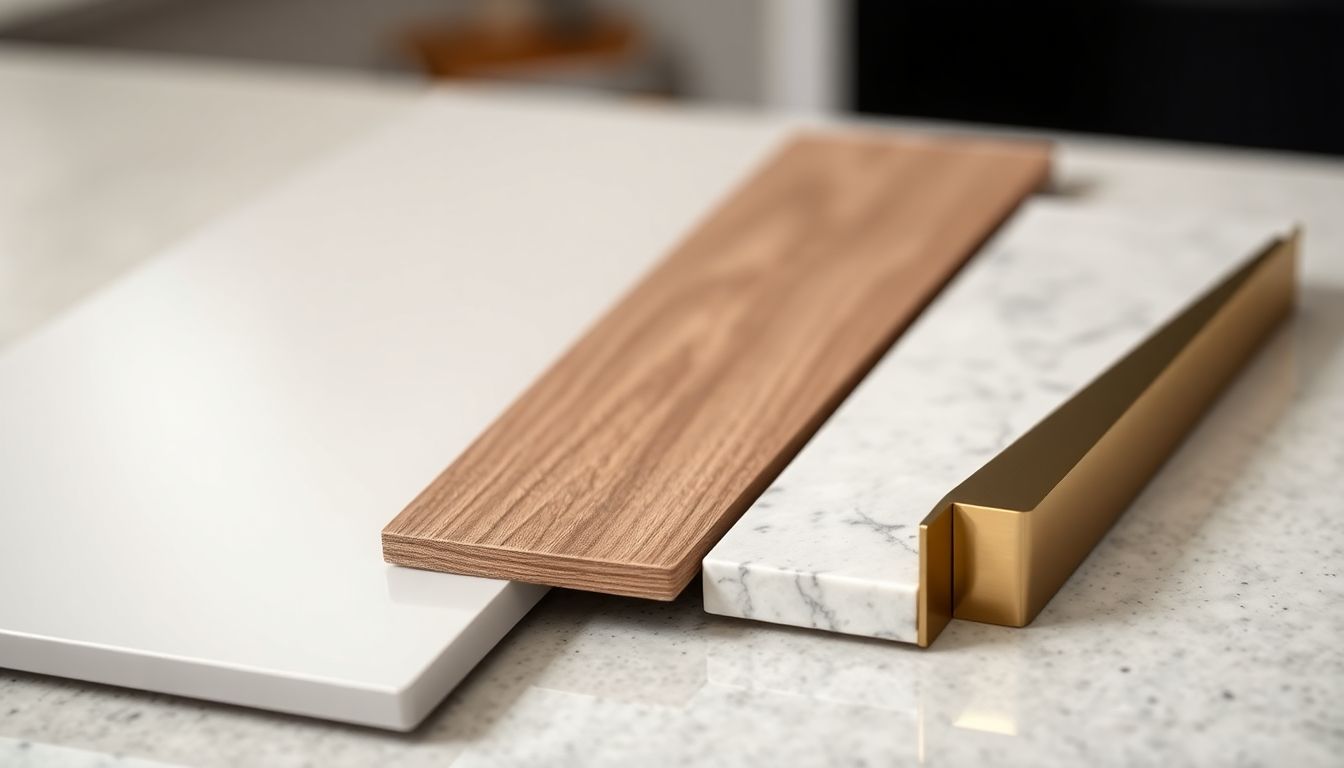
Hardware is where the user meets the object. Pulls, hinge action, and drawer slides set expectations. We test hardware in our shop before we fit a project. Smooth drawer movement and precise soft close build confidence.
Hidden pulls keep faces clean and let grain run without interruption. Metal handles add a touch of contrast and give a clear grip point. Choose hinges with a strong warranty and proven performance.
Lighting strategy for form and work
Light tells the eye where to look. It also helps you see while you work. We use layered lighting across fixtures and zones. Each layer has a role.
Layers we use
- Ambient lighting for general use and mood
- Task lighting for counters and stove areas
- Accent lighting to highlight textures and niches
We place undercabinet light to cut shadows on counters. We add pendant light over islands for a focal point and for direct task light. Dimming is common so you set mood at will.
Smart storage solutions with clean lines
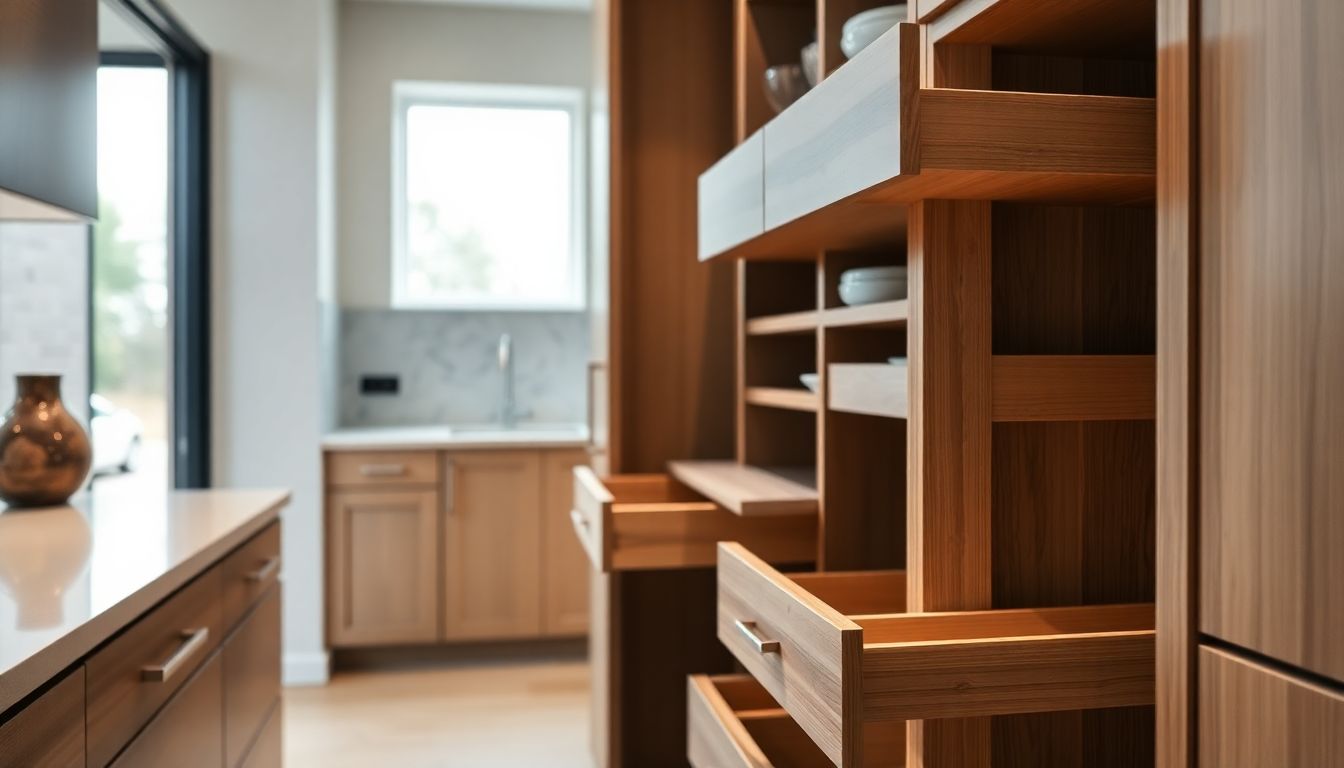
Storage holds the shape of a kitchen. Pullouts, vertical dividers, and deep drawers keep counters free. We plan storage for real items and real routines. Each drawer gets a role. Each cabinet gets a fit.
Hidden pantries free wall space and let the room breathe. Appliance garages hide clutter and keep counters clear. Built in spice racks and tray dividers keep things in place and reduce visual noise.
Maintenance and lifespan of choices
Every finish needs care. We tell clients how to maintain each surface before final sign off. A simple care plan extends life and keeps the kitchen consistent with its first day look.
Hard finishes such as quartz handle stains and heat with ease. Wood surfaces ask for oiling or a specific cleaner. Metals benefit from gentle cloth wipes not abrasive pads. We document steps and provide samples to help you keep the space in top shape.
Visual rhythm and proportion in cabinetry
How scale affects calm
Cabinet height, door size, and gap spacing set a rhythm. Repeat a panel width across a run to create order. Vary heights to give a room lift. A tall pantry anchors a wall. A run of low cabinets lengthens a view.
We use negative space with purpose. Empty wall between cabinets feels like a breath. Open shelving must hold curated items to stay neat. Balance proportion to avoid a top heavy or crowded look.
Project examples that show tradeoffs
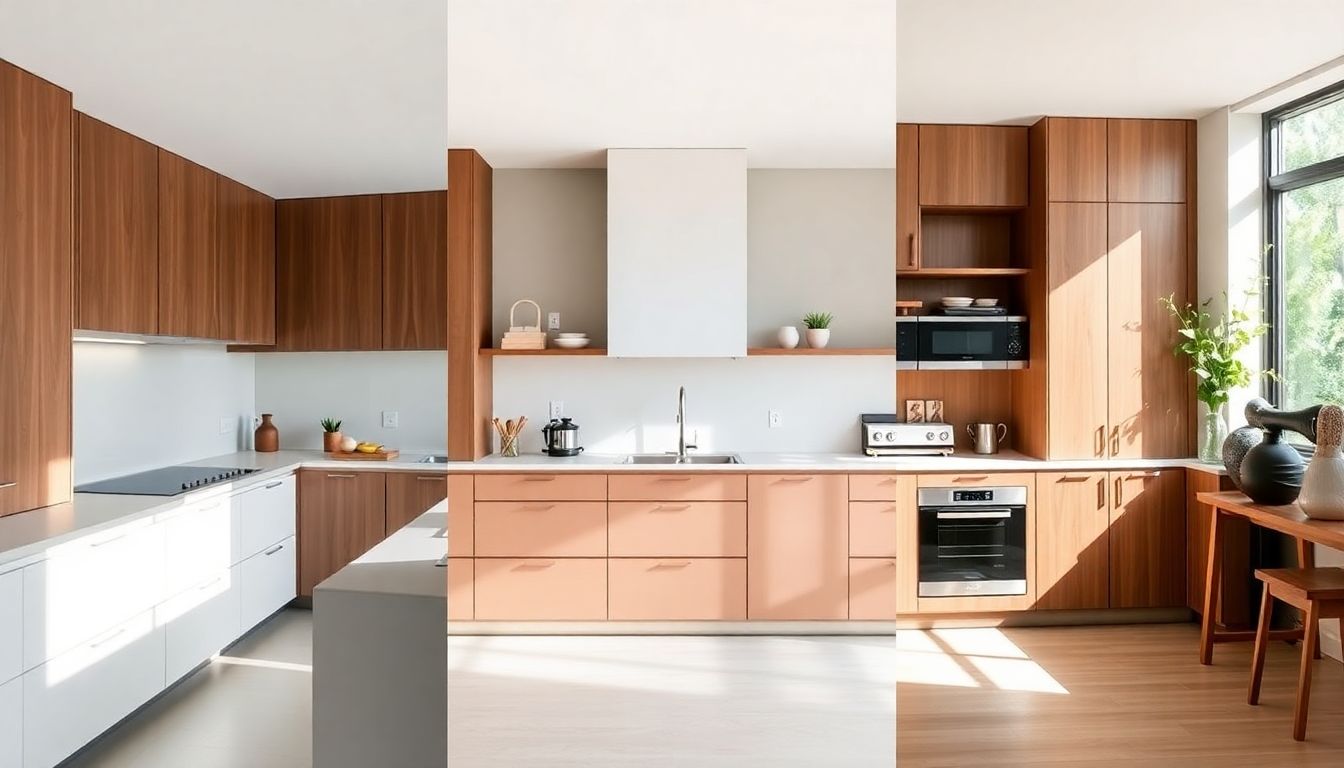
We test ideas on real projects. One project favored visual calm over open shelving. The room used flush doors and hidden appliances. It felt clean and quiet in daily use.
Another project favored workflow. We kept accessible storage and left some open shelving. The room handled family prep and served as a hub for weekday meals.
Both succeeded because priorities were clear. Each choice had an effect on budget and on lead time. We plan both with the builder early so installation moves smooth.
Budget and timeline notes for clarity
Budgets reflect choices. High end appliances affect routing and ventilation. Custom panels add shop time. Natural stone slabs require lead time for templating and install. We give phased pricing so you see tradeoffs early.
We work with builders and designers to slot production and install. Early collaboration reduces delays. We handle shop drawings and will place orders once selections are locked. A clear schedule lowers stress on site.
If you want help setting priorities or a phased plan, we will meet and review options. We will walk your site and provide sketches and a realistic timeline.
Next step Reach out to DOCA Houston and set a time to review your plans. We will bring samples and a notebook and we will listen. Your kitchen is a room you use every day. Let us help it work as you want and look the way you expect.